Two baskets, same scrap mix, different heat time. Look at piece size.
By Aaron McClendon, Founder & CTO, Arkitekt AI
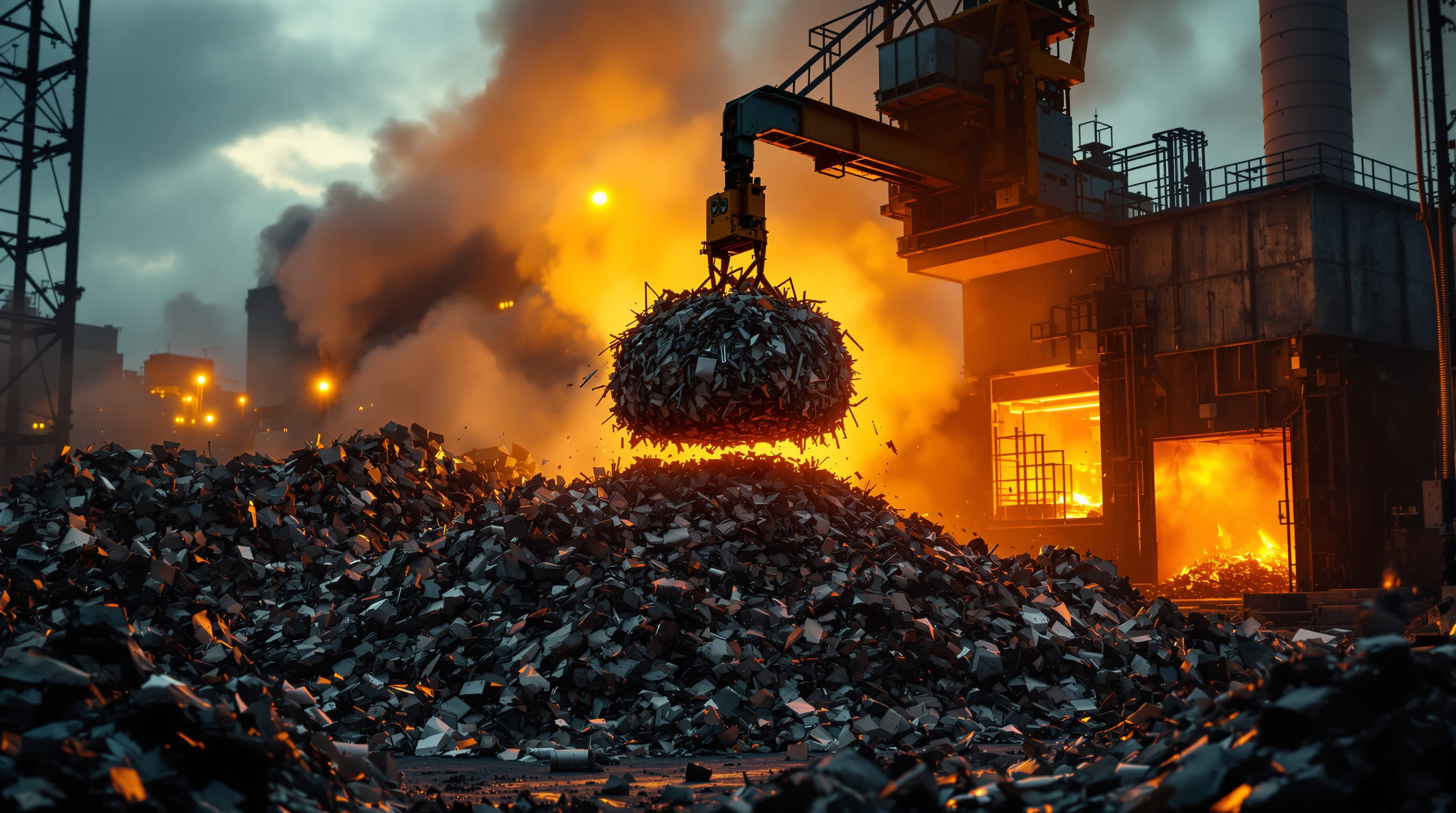
If you run an EAF melt shop, you already know two heats with nominally identical charge recipes can behave very differently. Same shred percentage, same busheling, same pig iron. One taps in 42 minutes, the next takes 51 and eats an extra MWh. The operators shrug. The charge model shrugs. The cost gets buried in the monthly energy variance.
We've written before about scrap mix as a P&L decision. This is a narrower point: piece size is a variable your charge model is probably treating as a constant.
What the 2025 modeling work actually shows
A recent peer-reviewed study by Mapelli and colleagues at Politecnico di Milano modeled how scrap piece geometry drives both charge-to-melt time and metallic losses in an EAF (Ironmaking & Steelmaking, 2025). The mechanism isn't surprising once you say it out loud. Bigger pieces have lower surface-area-to-volume ratios, so they take longer to heat and melt. Smaller, denser fractions pack better in the basket, transfer heat faster, but oxidize more aggressively and end up in the slag as FeO.
The piece-size distribution moves two of the KPIs your controller stares at every shift: tap-to-tap and yield. It also quietly moves electrode consumption and refractory wear, because arc stability depends on how the pile collapses around the electrodes during bore-in.
Why the software usually misses this
Walk the yard. The scrap grades are tracked. The heat recipe is tracked. The basket weights are tracked. What almost nobody captures in a structured way is the size distribution of what actually went into the bucket.
The grapple operator knows. The yard supervisor knows, roughly. The charge model doesn't, because there's no field for it in the MES and no sensor pushing it to the historian. So the model assumes an average piece size per grade, which is fine when your shred supply is consistent and wrong the week a new supplier shows up with a coarser cut.
What this looks like on the cost side
SteelOnTheNet's 2025 EAF cost model puts scrap, electricity, and electrodes as the three largest conversion cost lines by a wide margin. A one-percent yield swing on a 100-ton heat is a ton of liquid steel. A 10% swing in tap-to-tap on a shop running 20 heats a day is real throughput. Both move with piece-size distribution. Jeremy Jones' worldsteel presentation walks through the metallurgical side of feedstock selection in more detail if you want the mechanism.
The boring fix
You don't need computer vision on every grapple to start. In our experience, the first useful step is capturing size class as a categorical field at the basket, from the yard operator, and joining it to heat performance in whatever tool you use for post-heat analysis. Give it two months. If piece size shows up as a significant predictor of heat time or yield variance, then it's worth instrumenting further.
Start with the data you can collect Monday. The charge model gets smarter when you stop lying to it about what's in the basket.
Arkitekt AI builds production-grade custom software on managed infrastructure — replacing the SaaS you've outgrown with systems you own. If you're paying for tools that almost fit, let's talk.
Source: “Inside Big Software's fight for its life,” Ashley Stewart, Business Insider, April 7, 2026.