The scrap mix is a P&L decision. Treat it like one.
By Aaron McClendon, Founder & CTO, Arkitekt AI
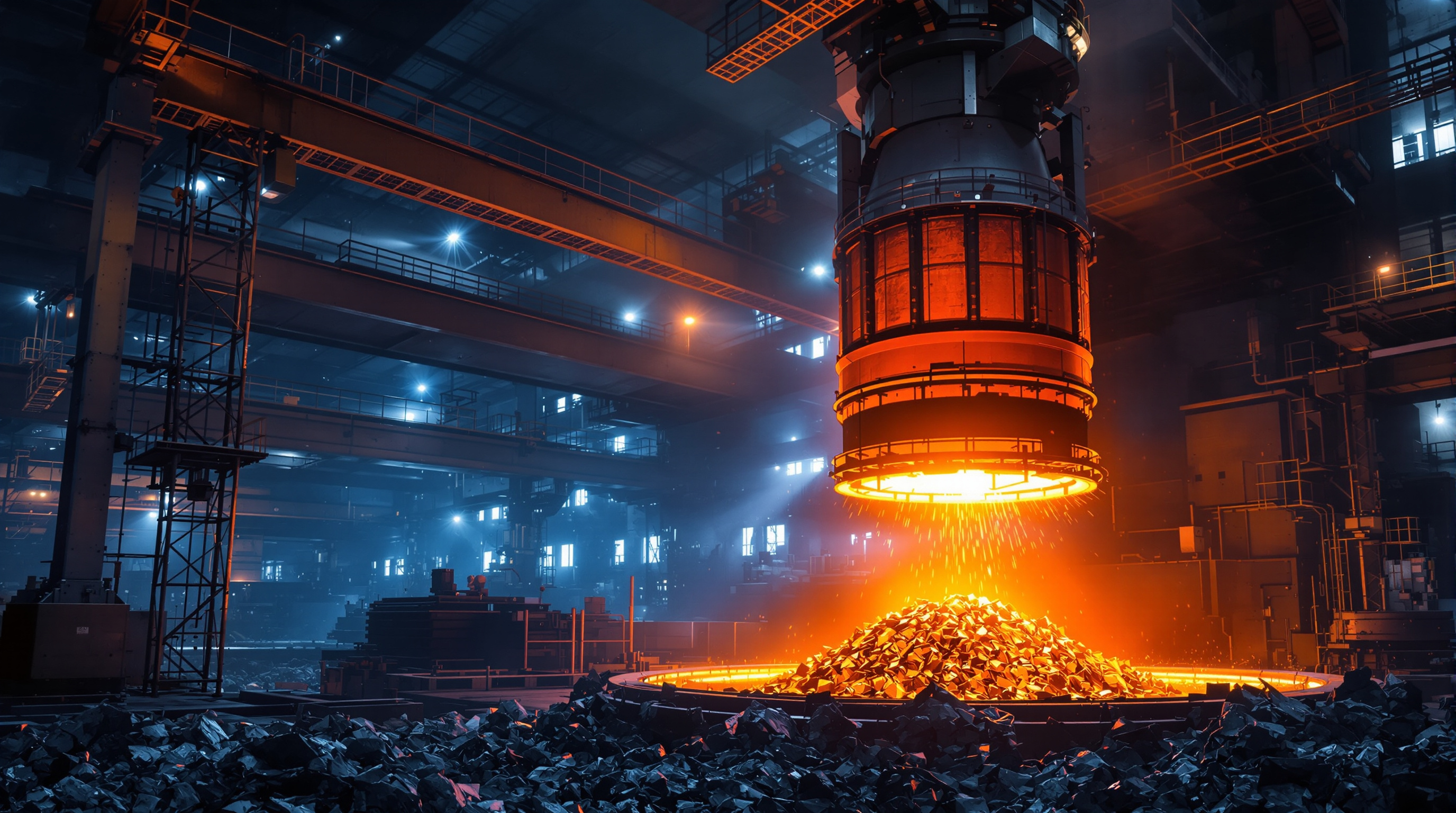
A new peer-reviewed study out of Politecnico di Milano this year put numbers on something every melt shop supervisor already suspects: the geometry and mix of the scrap you drop into an EAF is not a housekeeping detail. It's a first-order cost driver. Mapelli et al. modeled how scrap size influences charge-to-melt time and metallic loss, and the takeaway is uncomfortable — the way you build a bucket shows up in tap-to-tap and in yield, every heat, forever.
Pair that with the August 2025 EAF cost model from SteelOnTheNet, where scrap is the dominant line item and electrodes, power, and refractories stack on top, and the argument writes itself. A few percent drift in metallic yield or energy per ton is not a rounding error. On an annual basis it's a capital project's worth of money you already spent and didn't get back.
Why this stays a spreadsheet problem
Walk most melt shops and you'll find charge decisions being made from a mix of a standing recipe, the scrap yard foreman's read on what's in the bays that morning, and a chemistry target from the next heat on the schedule. Somebody, somewhere, has an Excel file with density assumptions and residuals by grade. It works. It also leaves money on the floor every heat, because it can't actually solve the problem it's being asked to solve.
The real problem, as SMS group lays out in their charge optimization write-up, is a constrained optimization against moving inputs: scrap prices that change week to week, inventory that changes hour to hour, chemistry windows that change heat to heat, residual limits that are hard constraints, and energy cost that changes intraday if you're on a real tariff. Add scrap sizing effects on melt time and you have a problem with too many variables for a human to solve well under time pressure — and the person building the bucket has about four minutes to decide.
What a useful system actually does
In our experience, the wins here don't come from a moonshot AI model. They come from getting the boring pieces wired together:
- Live scrap inventory by bay, with density and residual assumptions that are actually maintained. - The order book and grade targets pulled from whatever passes for your MES, not retyped. - A solver that respects hard chemistry constraints and minimizes total cost per good ton, not just $/ton of charge. - A recommendation the crane operator can accept, override, or adjust — with the override captured, because that's your training data.
None of that is glamorous. It's plumbing between systems you already own, wrapped around a solver that respects the physics.
The reason to do it isn't the demo. It's that the same heat, run with a better-composed charge, taps a few minutes sooner with a fraction of a percent more yield. Multiply by heats per year. That's the number that matters, and it's already sitting in your historian waiting for someone to go get it.
Arkitekt AI builds production-grade custom software on managed infrastructure — replacing the SaaS you've outgrown with systems you own. If you're paying for tools that almost fit, let's talk.
Source: “Inside Big Software's fight for its life,” Ashley Stewart, Business Insider, April 7, 2026.